Project description

Early childhood is a critical period for language and literacy development. For children who are blind or visually impaired, early exposure to tactile literacy and Braille is essential for developing reading skills, independence, and participation in education and society.

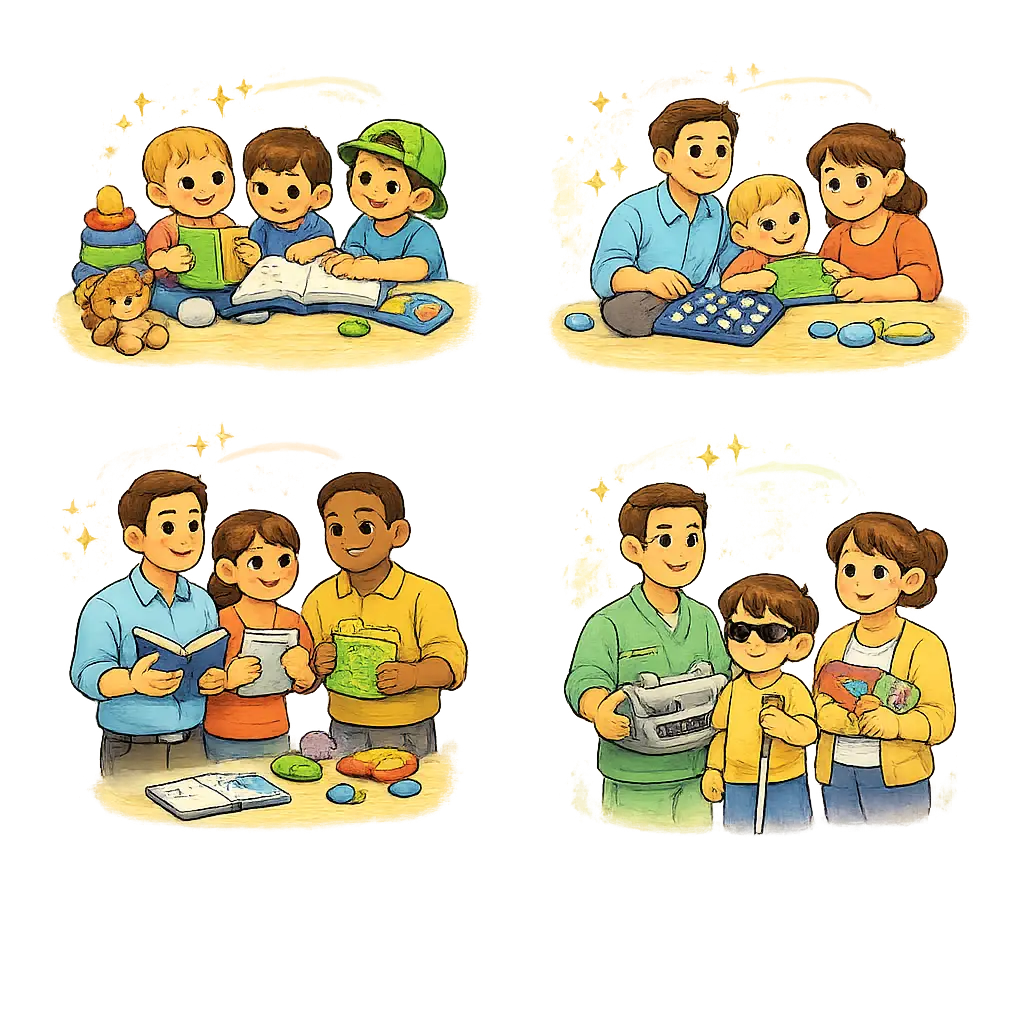
The Road2Braille project aims to support early intervention professionals, parents, and educators in introducing Braille to children aged 0–6 years in a playful, inclusive, and developmentally appropriate way.

The project focuses on strengthening early literacy by providing tools, methodologies, and learning materials that make Braille accessible from the earliest stages of development.
The Road2Braille project aims to:

  • Promote early Braille awareness for children with visual impairment.

  • Support parents and early intervention specialists with practical guidance.

  • Develop play-based learning activities that introduce Braille concepts.

  • Strengthen inclusive education practices across Europe.

  • Encourage collaboration between teachers, therapists, and families.

Project objectives

Target groups

Primary beneficiaries

  • Children with visual impairment aged 0–6 years

Secondary beneficiaries

  • Parents and family members

  • Early intervention professionals

  • Preschool teachers and special educators

  • Therapists and support staff

By equipping adults with knowledge and tools, the project aims to create a supportive learning environment where Braille literacy can emerge naturally through play and exploration.

  • Development of early Braille learning materials

  • Creation of training material for educators

  • Creation of training ideas for parents and professionals

  • Sharing results with the international education community

Project activities

Expected results & Impact

  • Improve early literacy opportunities for visually impaired children

  • Increase confidence among parents and educators when introducing Braille

  • Promote inclusive educational practices across partner countries

  • Encourage the use of tactile learning materials in early childhood education

Ultimately, the project contributes to equal access to literacy and lifelong learning opportunities.